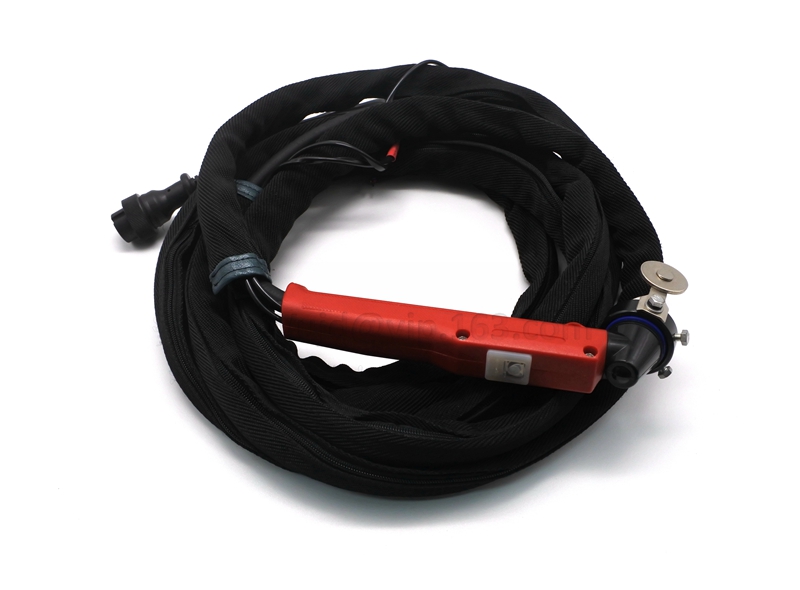




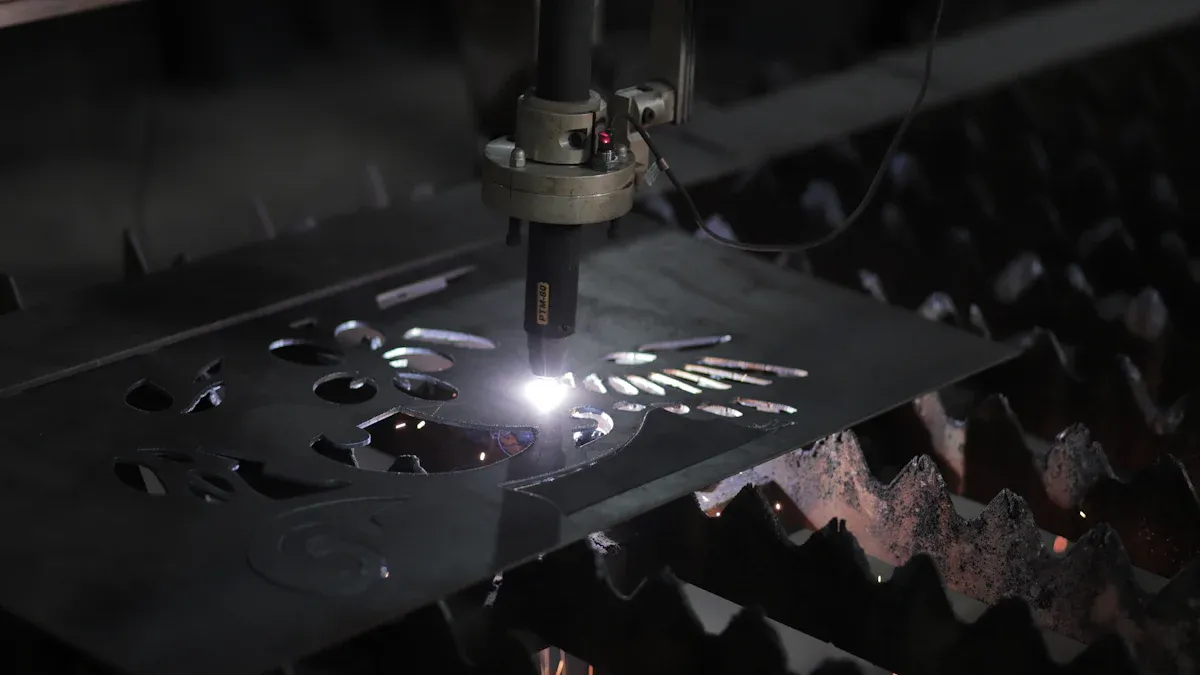
A plasma cutting torch lets you cut metal with a stream of hot gas. This tool is important in metalworking because it cuts fast and with accuracy. Plasma cutting is special because it makes sharp, clean cuts and saves time on extra work.
You get fast and exact cuts.
The technology helps you use less material and work less by hand.
You can make detailed shapes for many jobs.
New changes in 2025 will make plasma cutting torches work better and safer.
Key Takeaways
Plasma cutting torches cut metal quickly and accurately. They are very important for metalworking jobs. - New improvements in 2025 make them safer and work better. This means they perform well and waste less material. - Automation and smart technology help the cutting process. Workers do not have to watch the machine all the time. - Picking the right plasma cutter depends on how thick the metal is. It also depends on if you use it for work or as a hobby. - You must take care of the plasma cutter often and wear safety gear. This keeps the machine working well and keeps you safe.
Plasma Cutting Torch Basics
What Is a Plasma Cutting Torch
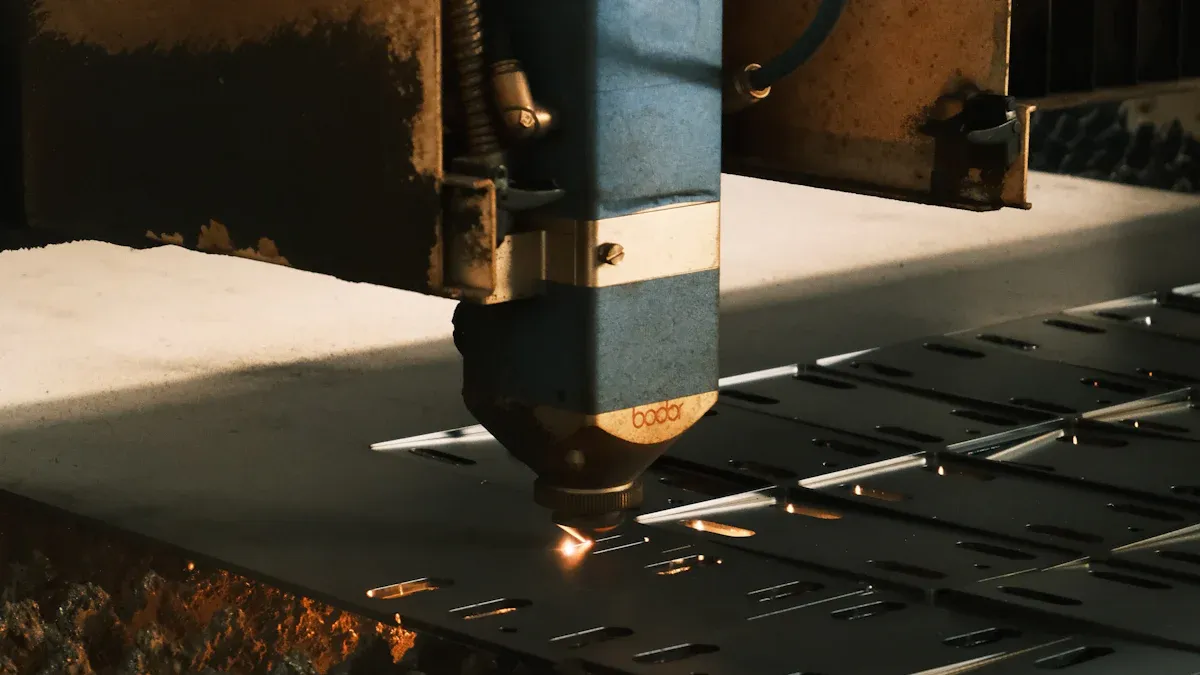
A plasma cutting torch is a tool you use to cut metal quickly and accurately. You can find this tool in many metal fabrication shops. It works by sending a high-velocity jet of ionized gas, called plasma, through a small nozzle. This plasma gets so hot that it melts metal, letting you make clean cuts with little effort.
You will see several important parts in a plasma cutting torch. Each part has a special job:
Power Supply: Gives the torch the energy it needs to create the arc.
Arc Starting Console: Starts the arc by sending a high-frequency signal.
Plasma Torch: Holds all the parts and directs the plasma jet.
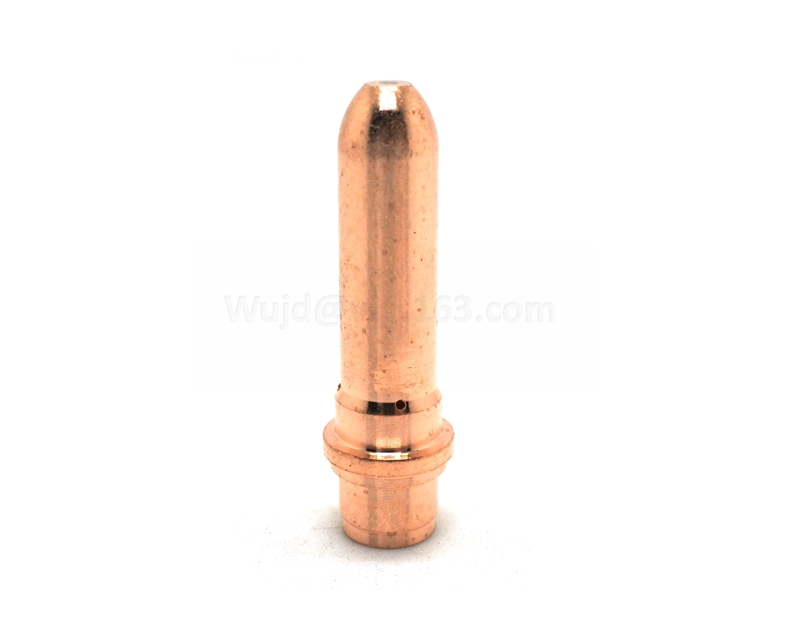
Electrode: Carries the electric current to make the arc.
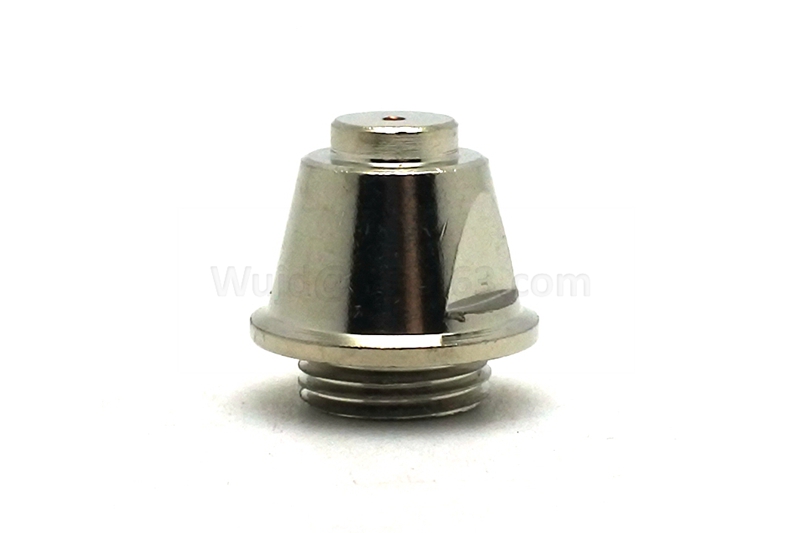
Nozzle (Tip): Focuses the plasma and helps you cut with precision.
Shield Cap: Protects the torch from hot metal splashes.
Swirl Ring: Controls the gas flow to keep the plasma steady.
Gas Supply: Provides the plasma gas and shielding gas.
CNC Controller: Moves the torch automatically for detailed work.
Cooling System: Keeps the torch from getting too hot.
Tip:Modern plasma cutting torches, like the P80, have strong construction and ergonomic designs. You can use them for long periods without discomfort.
Plasma cutting torches stand out from other cutting tools. They give you high precision and speed, especially on thinner materials. You can see the difference in this table:
| Feature | Plasma Cutting | Torch Cutting |
|---|---|---|
| Precision | High precision, ideal for thinner materials | Less precision, better for thicker materials |
| Speed | Cuts quickly and cleanly | Slower, often requires cleanup |
| Cutting Method | Uses a plasma jet | Melts metals using oxygen and fuel |
Main Uses
You can use a plasma cutting torch in many metal fabrication tasks. It is popular in industries that need fast, accurate, and clean cuts. Here are some main uses:
| Application Type | Description |
|---|---|
| Automated CNC Cutting Solutions | Used for all types of cutting, including plasma cutting with motion control. |
| Tube and Automated Pipe Cutting | Cuts tubes and pipes quickly and efficiently. |
| Structural Steel Cutting | Cuts different steel parts for buildings and machines. |
You can cut many types of metals with a plasma cutting torch. These include:
Stainless steel
Copper
Iron
Aluminum
The torch works well on different thicknesses. You can see the cutting abilities in this chart:
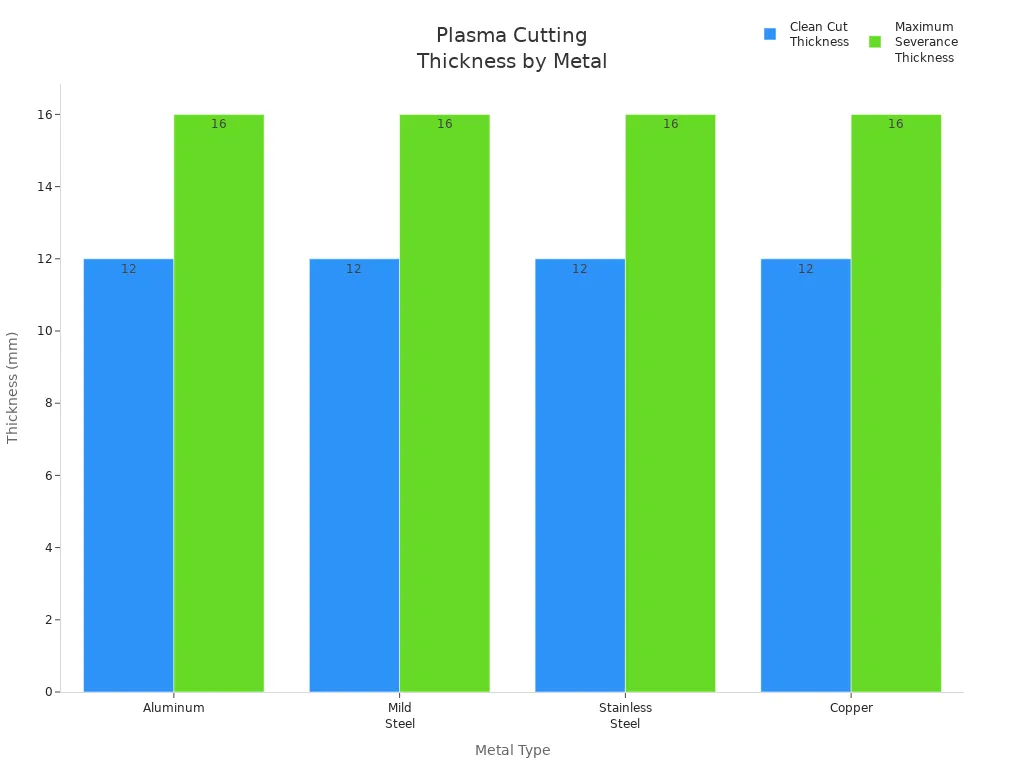
Plasma cutting torches are common in metal fabrication shops, factories, and construction sites. You can use them to cut steel plates, pipes, and even detailed shapes for custom projects. Plasma cutting machines help you finish jobs faster and with less waste. You will also notice that plasma cutting produces less slag, so you spend less time cleaning up.
Plasma cutting is more efficient than oxy-fuel cutting, especially for thin steel sheets. You get faster results and lower operational costs because you only need electricity. Plasma cutting machines also create less waste, making them a better choice for the environment.
If you want to get the most out of your metal fabrication work, a plasma cutting torch is a smart tool to have. You can rely on it for speed, accuracy, and clean results every time.
How a Plasma Cutter Works
Plasma Creation Process
You might wonder how a plasma cutter creates such intense heat to slice through metal. The process starts with a simple gas, like air or nitrogen. When you turn on the plasma cutter, the machine heats this gas to extremely high temperatures—between 20,000 °C and 30,000 °C. At these temperatures, the gas molecules break apart. Electrons separate from the atoms, creating a mix of free electrons and positively charged ions. This mix forms plasma, which is the fourth state of matter.
Here is how the plasma creation process works step by step:
The plasma cutter heats the gas until it becomes so hot that the molecules split.
Electrons leave their atoms, making a cloud of charged particles.
These fast-moving electrons bump into other particles, releasing energy.
This energy gives plasma its power to cut through metal.
The P80 torch uses this process to create a strong, focused plasma jet. The torch design helps keep the gas flow steady and the temperature high, so you get a reliable cutting process every time.
Tip: Always check the gas type and pressure before starting. The right settings help you get the best results from your plasma cutting torch.
Cutting Mechanism
Once the plasma forms, the cutting process begins. The torch sends a high-voltage current through the plasma, creating a pilot arc. This arc jumps from the electrode inside the torch to the metal you want to cut. The arc ionizes the gas, turning it into a powerful plasma stream.
The cutting process works like this:
The power source creates a high electric current.
The current forms a small plasma arc inside the torch.
This arc jumps to the metal, making a pilot arc.
The plasma jet melts the metal at the cutting point.
High-velocity gas blows away the molten metal, leaving a clean cut.
You control the torch by pulling the trigger. Hold the torch at a 90-degree angle and move it slowly along the cutting line. A steady hand and even speed help you get smooth, precise cuts with little slag or dross.
Here are the main steps you follow during the cutting process:
Wear protective gear and make sure your workspace has good ventilation.
Check the power supply and connect the air compressor.
Attach the torch and ground clamp securely.
Set the amperage based on the thickness of the metal.
Hold the torch at the right angle and distance.
Ignite the plasma arc and move the torch along your cutting line.
After finishing, turn off the cutter and clean up your workspace.
The P80 torch makes this process easier with its ergonomic grip and advanced safety features. You can cut different metals, like steel or aluminum, with confidence. The torch design helps you keep a steady hand, which is important for a clean cutting process.
Note: Plasma cutting works best when you keep the torch moving at a steady pace. If you move too fast or too slow, the cut may not be as clean.
You now know how a plasma cutter works. The process uses science and smart design to help you cut metal quickly and accurately. With the right torch and careful technique, you can achieve professional results every time.
Plasma Cutting in 2025
2025 Advancements
Plasma cutting will change a lot by 2025. The process now uses less energy and gas. This helps you save money on each job. You will see better precision and less wasted metal. This means you do not throw away as much material. Programming for cnc plasma cutting is now much faster. Your work is easier and takes less time.
Better precision means less waste and cleaner cuts.
Programming for cnc plasma cutting is much faster now.
There is more automation in plasma cutting now. AI and IoT help keep your plasma cutting torch working well. These smart systems tell you when to do maintenance. They help you get the best results every time. Automation means you do not have to watch the machine all the time. The machine can do more work by itself.
AI and IoT help you know when to do maintenance.
Automation helps you work faster and do less by hand.
Energy-saving plasma systems help the environment.
CNC plasma cutting platforms now use learning algorithms. These systems change cutting settings for different metals. You get better results with steel or aluminum, even for hard designs. New torches and consumables last longer and give better cuts.
Efficiency and Safety
Plasma cutting in 2025 is safer and more efficient. Modern plasma cutting torches, like the P80, are strong and easy to hold. You can use digital controls on the torch. This makes it simple to change settings and stay comfortable.
New ergonomic designs for plasma cutting torches, like digital controls, let you change settings right on the torch. This makes it easier and faster to adjust, so you are more comfortable and get more done.
You will see faster cutting and better accuracy. Torch height control keeps the torch at the right distance. This helps you make smooth cuts and waste less metal. Stable power supplies keep your cuts accurate, even if you move quickly.
Safety is very important. Plasma arc cutting gets very hot and makes molten metal and fumes. You should wear flame-resistant clothes, gloves, and a welding helmet. Good ventilation and fume extraction keep the air clean, especially with stainless steel or aluminum. Modern plasma cutting torches have features to stop overheating and protect you from burns or splashes.
CNC plasma cutting now lets you make many cuts with little help. Machines give you the same good cuts every time. You can trust the process for cutting stainless steel, aluminum, and steel.
Choosing a Plasma Cutter
Selection Tips
You need to pick the best plasma cutting tool for your job. First, think about how much you will use it and what you want to cut. If you work in a factory, you need a strong machine. It should cut thick steel and run for a long time. If you do small projects at home, a lighter plasma cutter is better. It is easier to carry and use.
Here is a table that shows what is important for factories and for people who do projects at home:
| Criteria | Industrial Use | Hobbyist Use |
|---|---|---|
| Duty Cycle | Long duty cycle for continuous operation | Short duty cycle for occasional use |
| Material Thickness | Cuts thick steel and other metals | Handles thinner materials |
| Amperage | High amperage for tough jobs | Lower amperage for light tasks |
| Voltage | Needs 220/240V power | Works with 110/120V outlets |
| Portability | Heavy, less portable | Lightweight and easy to move |
| Operating Costs | Higher due to frequent use | Lower, less frequent maintenance |
When you pick a plasma cutting torch, check the thickness of metal you cut most. If you cut thick steel, you need more amperage. Make sure your plasma cutter works with your power at home or work. Pick a duty cycle that matches how long you work. If you move your cutter a lot, choose a light one. Think about how much you will spend on parts and repairs over time.
Tip: Always look for ISO certifications and safety marks. These show your plasma cutting torch is safe and good quality.
Operation & Maintenance
You need to use your plasma cutting torch safely and take care of it. Wear flame-resistant clothes, gloves, and a welding helmet. Good airflow helps get rid of fumes, especially when cutting steel or aluminum.
Follow these steps to keep your plasma cutter working well:
Wipe electrodes with a soft cloth after each use.
Keep electrodes dry so they do not get damaged.
Check coolant flow so the torch does not get too hot.
Look at electrical connections to make sure they are tight and clean.
Change parts before they wear out.
Make a plan to do regular maintenance.
Use the right parts for your plasma cutting machine.
Start your cuts at the right height to keep the electrode safe.
Do not use long pilot arcs so your electrode lasts longer.
Here is a table that shows common mistakes and how to stop them:
| Operational Error | Prevention Method |
|---|---|
| Neglecting routine maintenance | Clean torch threads and check for damage regularly |
| Not checking gas/coolant flow | Monitor gas pressure and coolant levels before each use |
| Piercing too low | Keep a safe standoff distance to protect the nozzle |
| Cutting too fast or too slow | Adjust speed for clean edges and less dross |
| Stretching the arc | Start and end cuts correctly to avoid arc stretching |
| Crashing the torch | Use height sensors and careful programming to prevent collisions |
You should also think about warranty and help after you buy. Good companies give training, quick service, and real parts. This helps your plasma cutting system work well for a long time.
You learned three key things about plasma cutting in 2025:
| Key Takeaway | What You Should Know |
|---|---|
| What it is | Plasma cutting torches use plasma to cut steel and other metals with speed and precision. |
| How it works | The torch creates a hot plasma arc that melts steel for clean, fast cutting. |
| What’s new in 2025 | New designs improve safety, efficiency, and make plasma cutting easier to use. |
Choosing a reliable plasma cutting torch matters. You get precision, efficiency, and safety. Longren offers high-quality torches with user-friendly designs and strong safety features. For your next steel project, trust Longren for your plasma cutting needs.
FAQ
How do you choose the right plasma cutting torch for your project?
You should check the thickness of the metal you want to cut. Look at the torch’s amperage and duty cycle. Make sure the torch fits your plasma cutter. Pick a torch with safety features and an ergonomic grip for comfort.
What safety gear do you need when using a plasma cutting torch?
You need flame-resistant gloves, a welding helmet, and safety glasses. Wear long sleeves and pants. Use ear protection if the work area is loud. Good ventilation helps remove fumes. Always follow safety instructions for your torch.
How do you keep your plasma cutting torch in good condition?
Clean the torch after each use. Check the nozzle and electrode for wear. Replace worn parts quickly. Store the torch in a dry place. Follow the maintenance tips in your user manual for best results.
Can you cut aluminum and stainless steel with a plasma cutting torch?
Yes, you can cut both aluminum and stainless steel. Set the correct amperage and use the right gas. Move the torch at a steady speed. Plasma cutting works well on many metals, including steel, copper, and iron.
What should you do if your plasma cutter does not start?
Check the power supply first. Make sure all cables connect tightly. Inspect the air pressure and gas flow. Look for worn or damaged parts in the torch. If you still have problems, read the user manual or contact customer support.