


What type of liner should be used for aluminum wire welding?
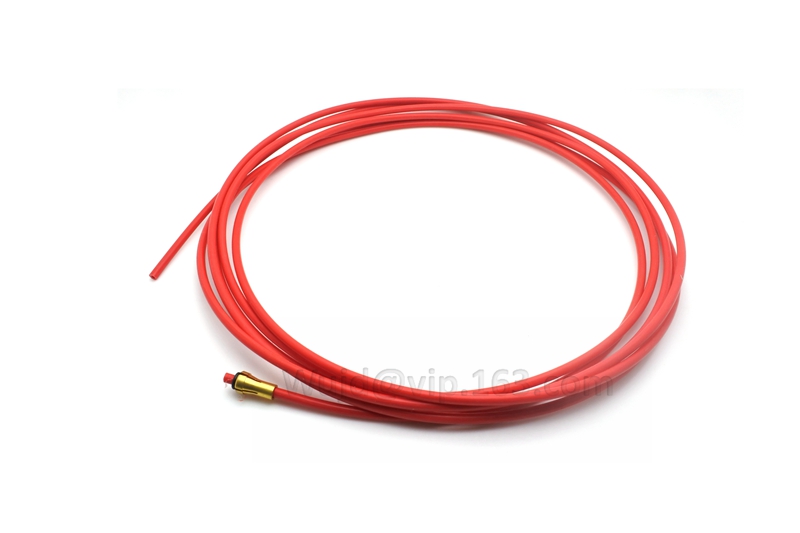
In the MIG (Metal Inert Gas) welding process, aluminum welding wires, due to their characteristics such as low melting point and high electrical conductivity, pose special requirements for welding equipment. Among them, the stability of the wire - feeding system directly affects the welding quality. As one of the core components, the selection of the welding liner (Teflon Liner for MIG Welder) is of crucial importance.
I. Special Requirements of Aluminum Welding Wires for Welding Liners
Compared with ordinary steel welding wires, aluminum welding wires are softer in texture and their surfaces are prone to oxidation. If traditional steel liners are used, the surface of the aluminum wires is easily scratched or deformed due to friction, which can lead to problems such as poor wire feeding and unstable arcs. In addition, aluminum materials tend to adhere to metal materials at high temperatures, further increasing equipment wear.
Therefore, liners suitable for aluminum welding wires need to meet the following core requirements:
Extremely Low Friction Coefficient: To reduce the contact resistance between the welding wire and the tube wall.
Anti - adhesion Characteristics: To avoid blockage caused by the residue of aluminum chips.
Long Wear - resistant Life: To reduce the downtime costs caused by frequent replacements.
II. Teflon Liner: An Optimized Choice for Aluminum Welding Wire Welding
Breakthroughs in Material Innovation
Teflon (polytetrafluoroethylene), as a high - performance engineering plastic, has the following advantages:
Self - lubrication: Its friction coefficient is only 0.04, about 1/10 that of steel liners, significantly improving the smoothness of wire feeding.
Chemical Inertness: It does not react with aluminum materials, preventing the peeling of the oxide layer.
Wide Temperature Resistance Range: It can work stably in the environment from - 200°C to 260°C, adapting to high - intensity welding scenarios.
Composite Structure Design
The Teflon Welding Liner launched by Longren adopts a double - layer composite technology:
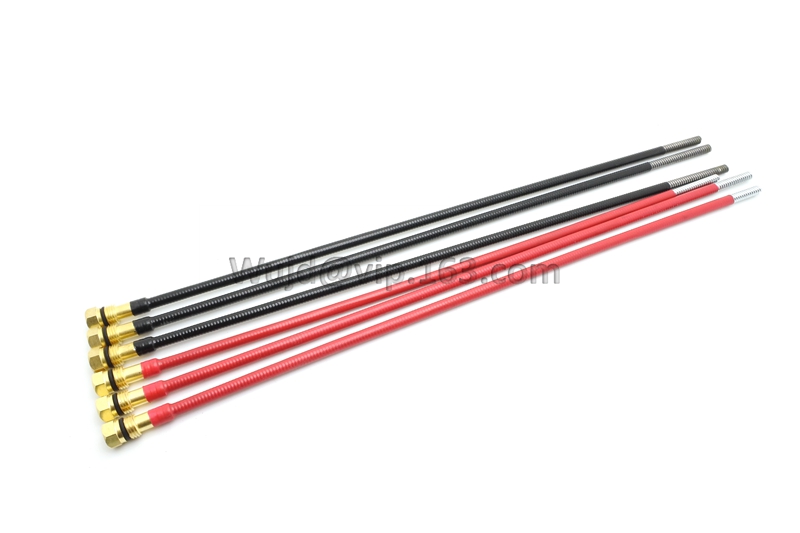
Outer Layer: High - strength spring steel provides structural support to prevent bending and deformation.
Inner Layer: The Teflon coating forms a protective film to ensure that the welding wire has zero contact with the metal surface.
This design combines flexibility and wear resistance, and its service life can be more than 3 times that of ordinary liners.
III. How to Select a Suitable Teflon Liner?
Specification Matching Principle
Longren's product line simplifies the selection process through color coding:
Blue Liner: Suitable for wire diameters of 0.8 - 1.2mm, with an inner diameter/outer diameter of 1.0/4.0 or 1.5mm, and three length options of 3m, 4m, and 5m are available.
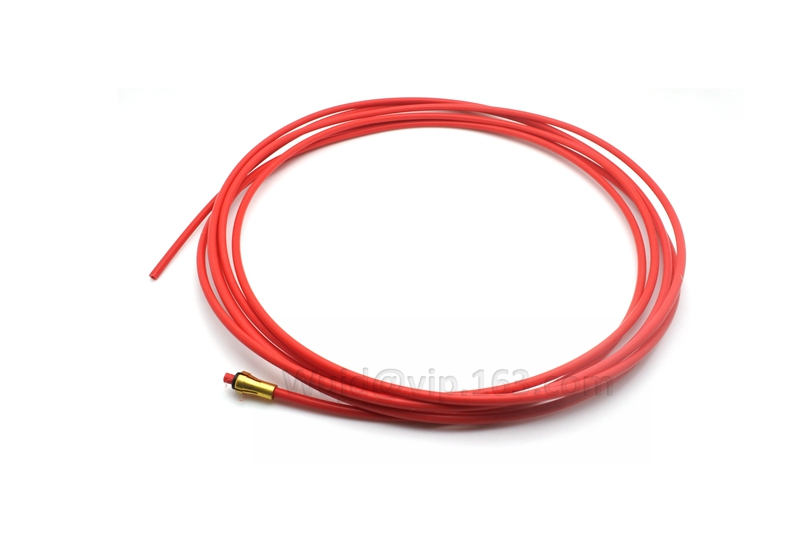
Red Liner: Supports wire diameters of 1.0 - 1.6mm, with an inner diameter/outer diameter of 1.2/4.0 or 2.0mm, and also covers specifications from 3m to 5m.
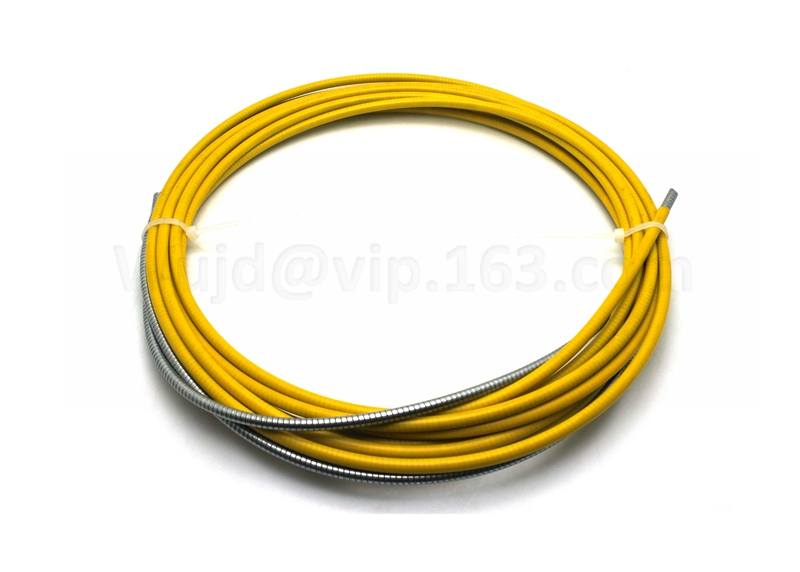
Yellow Liner: Specifically designed for thick wire diameters of 1.6 - 2.4mm, with an inner diameter/outer diameter of 1.6/4.7 or 2.7mm, and the length can be selected from 3m, 4m, and 5m.
It is recommended to select the corresponding specifications according to the equipment model and welding wire diameter to avoid wire - feeding jitter caused by excessive gaps.
Quality Verification Standards
Pay attention to the following certification marks when purchasing:
ISO 9001: Certification of the quality control system in the production process.
CE/TUV: Certification of EU safety and performance standards.
ROHS: Compliance certificate for the restriction of hazardous substances.
IV. Usage and Maintenance Tips for Teflon Liners
Installation Precautions
Use special cutting tools to cut the liner to ensure that the port is flat and burr - free.
After installation, conduct a wire - feeding test to observe whether there is jamming or abnormal noise.
Methods to Extend the Life
Regularly clean the accumulated aluminum powder in the tube with compressed air (it is recommended to do it once every 50 working hours).
Avoid long - term use in an environment exceeding 260°C.
Keep the liner in a naturally extended state during storage to prevent permanent bending.
V. Why Choose Longren's Teflon Liner?
s?As a leading brand focusing on the research and development of welding consumables, Longren ensures product advantages through the following technological innovations:
Nanoscale Coating Process: The thickness uniformity error of the Teflon layer is ≤ 0.01mm, achieving an ultra - smooth inner wall.
Dynamic Fatigue Test: Each batch of products passes 100,000 bending tests to ensure flexible durability.
Global Application Cases: It has provided customized solutions for fields such as automotive manufacturing and aerospace.
VI. Summary
In aluminum welding wire welding, choosing a Teflon Liner for MIG Welder designed specifically for soft materials can effectively solve pain points such as unstable wire feeding and rapid equipment wear. Longren, through the in - depth integration of materials science and structural engineering, provides multi - specification products that meet international standards, helping users significantly improve welding efficiency and process stability. The combination of correct selection and scientific maintenance can maximize the technical advantages of Teflon liners and provide reliable guarantees for high - quality welding.