


What is a Teflon Liner Used for?
In the field of aluminum welding, the stability of the wire feeding process directly affects the quality of the weld and production efficiency. Traditional steel or nylon liners often cause aluminum welding wires to jam or wear due to issues such as high frictional resistance and easy fouling. The Teflon liner for MIG welder, with its unique material and structural design, has become a key technology to address these pain points.
I. Definition of Teflon Liner and Special Requirements of Aluminum Welding
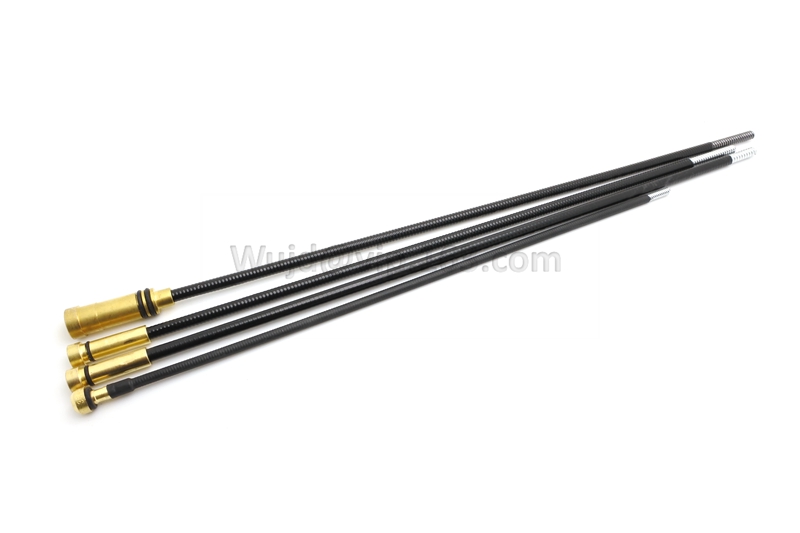
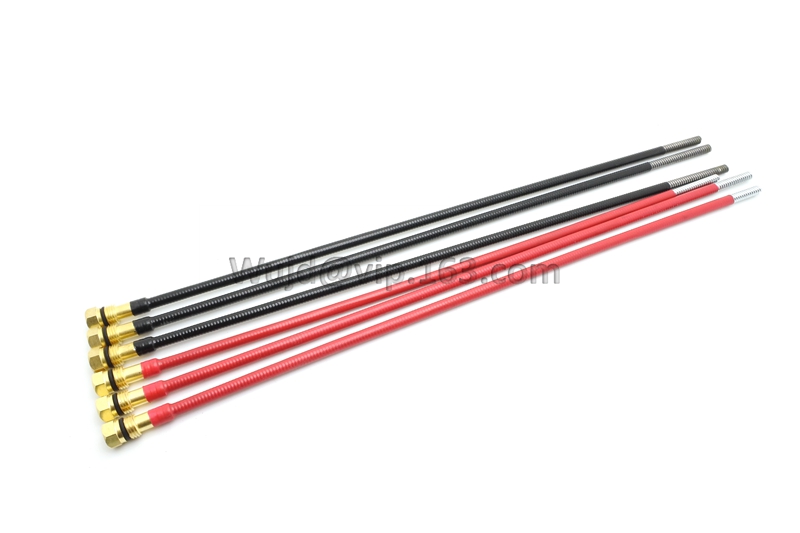
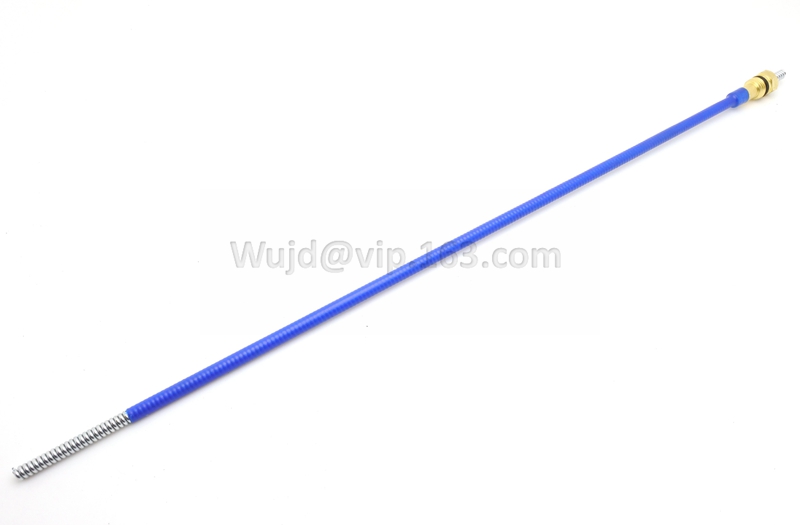
A Teflon liner is a wire - guiding hose composed of an inner layer of polytetrafluoroethylene (PTFE) and an outer layer of high - strength spring steel, specifically designed for the delivery of aluminum welding wires. Its core advantages stem from three characteristics of the PTFE material:
Ultra - low Friction Coefficient: The surface friction coefficient of PTFE is only 0.04, which is 60% lower than that of traditional nylon materials, significantly reducing the frictional wear between the aluminum wire and the tube wall.
Corrosion Resistance and Anti - adhesion: It can resist the adhesion of aluminum oxide particles on the surface of the aluminum welding wire and prevent pipeline blockage.
Wide Temperature Range Adaptability: It maintains physical stability in the temperature range from - 200°C to 260°C, adapting to high - intensity continuous operations.
Longren combines PTFE and spring steel through precision processes and offers multiple specifications of liners to meet the needs of 0.8 - 1.6mm aluminum welding wires, which are especially suitable for high - precision fields such as automotive manufacturing and aerospace.
II. How Does the Teflon Liner Improve the Performance of MIG Welders?
Solving the Problem of Aluminum Welding Wire Jamming
Aluminum welding wires are soft, and traditional liners are prone to generating metal shavings due to friction, resulting in interrupted wire feeding. Longren's solutions include:
Inner Wall Mirror Polishing Technology: The surface roughness Ra ≤ 0.2μm, approaching the smoothness of glass.
Segmented Support Structure: The segmented design of the spring steel reduces the minimum bending radius to 150mm, ensuring flexible wire feeding.
Reducing Oxide Film Contamination
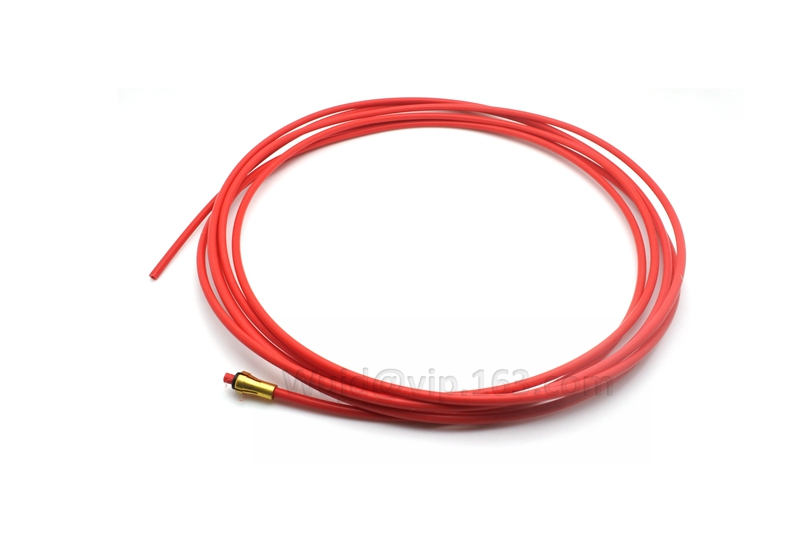
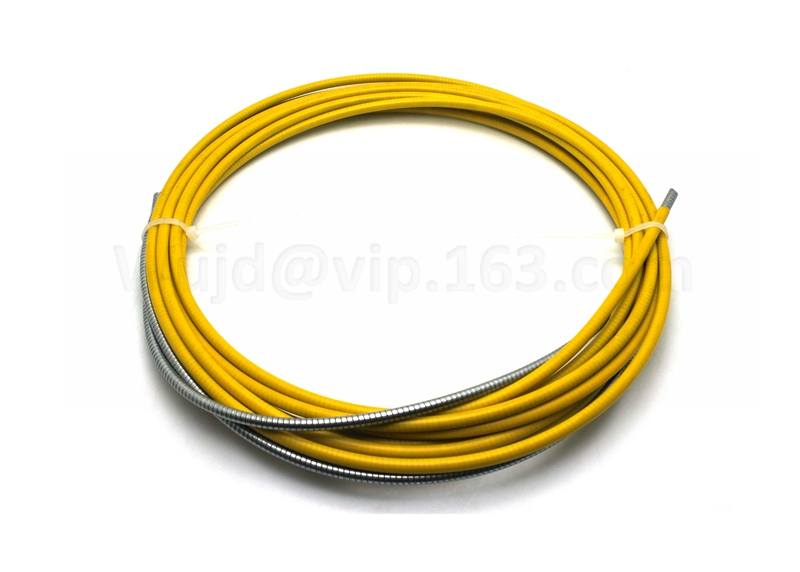
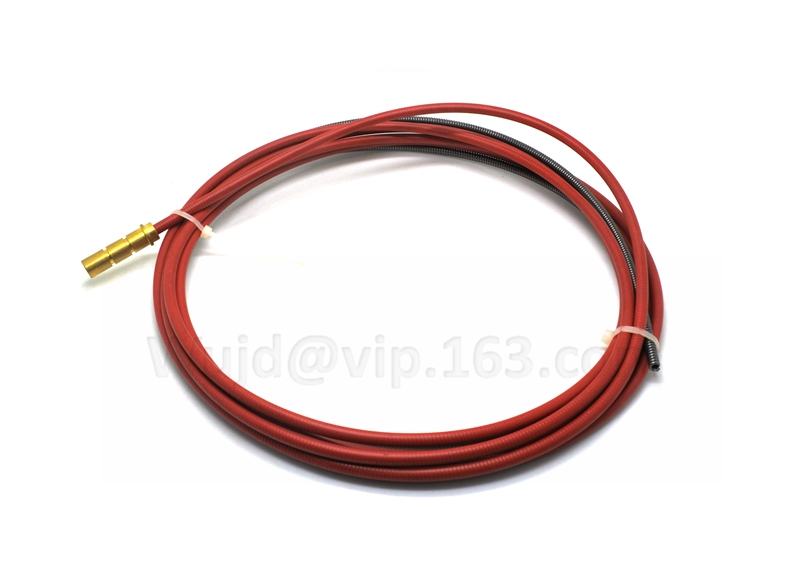
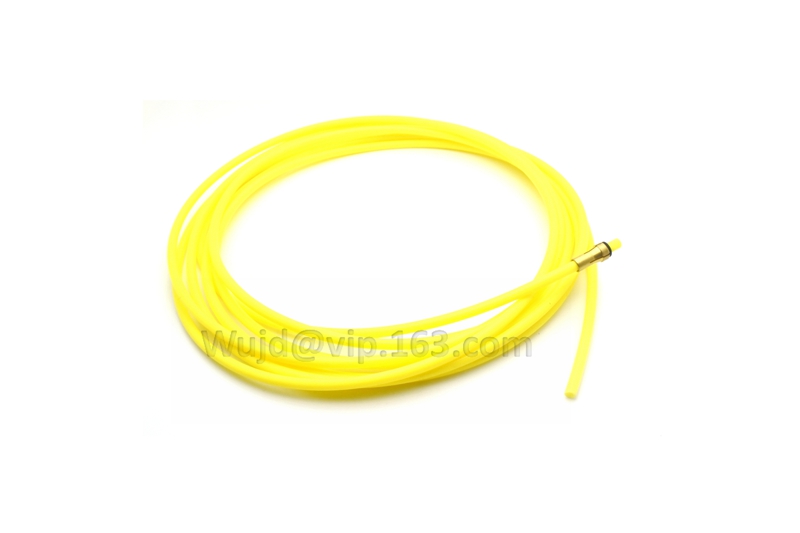
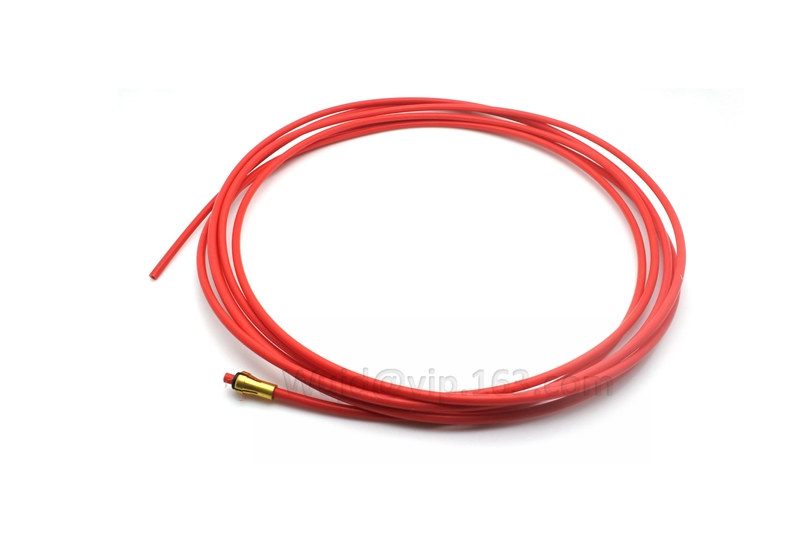
The non - sticky surface of PTFE can block the residue of aluminum oxide. Longren differentiates liner specifications through a color - coding system (blue/red/yellow) to accurately match different diameter welding wires:
Blue: 1.0mm, suitable for Miller welders
Red: 1.0 - 1.2mm, compatible with Lincoln equipment
Yellow: 1.6mm, suitable for Panasonic systems
Prolonging the Service Life of Equipment
The service life of ordinary liners is approximately 200 hours, while Longren's products use a three - layer composite process (PTFE + spring steel + anti - static coating), extending the service life to 800 hours and reducing maintenance costs by 60%.
III. Technical Innovations and Selection Guide of Longren Teflon Liner
Material and Structural Breakthroughs
Dual - density Spring Design: The 4.0/1.5mm variable - diameter tube body balances flexibility and compressive resistance (strength ≥ 45N/mm²).
Food - grade Safety Certification: It has passed FDA and RoHS tests to prevent welding fume pollution.
Global Compliance Certifications
It has passed certifications such as ISO9001, CE, and TUV, meeting the strict industry standards of the automotive and aerospace industries.
IV. Best Practices for Use and Maintenance
Installation Precautions
Before use, clean the inner wall with 99% isopropyl alcohol to ensure there are no impurities. Avoid bending angles less than 120° to prevent cracking of the PTFE layer.
Life Monitoring and Maintenance
When the wire - feeding resistance increases by 15%, check for wear. Inject the special lubricant (Longren LUB - 40) every 500 hours to reduce frictional wear.
Environmental Protection Treatment
PTFE materials can be recycled at high temperatures, complying with the EU WEEE directive and reducing the environmental burden.
V. Why Choose Longren?
As a core global supplier of Teflon liners for MIG welders, Longren holds a leading market position with three major advantages:
Nano - Strengthening Technology: The PTFE layer is added with 0.05μm tungsten carbide particles, increasing wear resistance by 300%.
Customized Services: It supports non - standard lengths from 1 - 15 meters and special requirements such as anti - static and oil - resistant properties.
Efficient After - sales Network: It provides a 6 - month warranty and a 48 - hour global spare parts response.
Frequently Asked Questions:
1. Can Teflon liners be used in steam environments?
Teflon liners can withstand 150°C saturated steam and tolerate 180°C superheated steam for short durations. In steam applications, thermal expansion must be addressed – use externally reinforced structures and install expansion compensators. Long-term steam sterilization cycles may cause slight hydrolysis, requiring periodic inspection.
2. What's the difference between Teflon liners and PFA tubing?
Both belong to the fluoropolymer family, with key differences:
● Processing: PFA is thermoplastic-processed; Teflon requires sintering
● Temperature resistance: Teflon has higher continuous use temperature (260°C vs 200°C)
● Purity: PFA typically has lower metal ion content
● Cost: Teflon liners offer better cost-performance ratio
Recommendation: Choose PFA for ultra-high purity applications; select Teflon for high-temperature corrosive environments.
3. How to solve cold flow issues in Teflon liners?
Cold flow refers to gradual plastic deformation under sustained pressure. Solutions include:
● Selecting glass fiber-reinforced Teflon
● Installing pipe supports at least every 1 meter
● Controlling working pressure below 50% of rated value
● Preventing mechanical vibration transfer to piping systems
4. What is the maximum allowable working pressure for Teflon liners?
Standard wall thickness (1.5mm) Teflon liners have maximum working pressures:
● 0.6 MPa at 25°C
● Drops to 0.4 MPa at 100°C
● 0.25 MPa at 150°C
● ≤0.15 MPa at 200°C
For high-pressure applications, choose braid-reinforced or thicker-walled products.
5. Is Teflon liner suitable for food contact?
Compliant with FDA 21 CFR 177.1550 and EU Food Contact Material Regulation (EC 1935/2004). Ideal for dairy, beverage, and meat processing. Use virgin material (no recycled content) and avoid colored liners with pigments.
6. How to connect Teflon liners?
Common connection methods:
● Flange connections: Most reliable (use Teflon gaskets)
● Threaded connections: Suitable for small diameters (avoid over-tightening)
● Clamp connections: Quick assembly (lower pressure rating)
● Welding: Requires professional hot-air welding
Avoid solvent bonding – Teflon resists common solvents.
7. Do surface scratches affect Teflon liner performance?
Minor scratches generally don't compromise sealing or corrosion resistance. Deep scratches may:
● Impede fluid flow causing stagnation
● Interfere with visual inspection
● Increase cleaning difficulty in sterile processes
Replace deeply scratched sections in critical process areas.
8. What is the service life of Teflon liners?
Design life exceeds 10 years under proper conditions. Actual lifespan depends on:
● Temperature: >200°C accelerates aging
● Media: Strong oxidizers reduce longevity
● Mechanical stress: Vibration/bending loads decrease durability
● Cleaning methods: Improper mechanical cleaning causes damage
Typical industrial service life: 5-8 years.
Conclusion
Today, with the continuous upgrading of aluminum welding processes, the Teflon liner for MIG welders has become a key component to improve efficiency and quality. Longren, with material innovation and intelligent manufacturing, provides highly reliable solutions for the industry. If you need to obtain product technical parameters or customized services, please contact us.